The furniture sector in Bangladesh operates under one of the most nuanced VAT structures — different rates apply at the manufacturing stage and at the showroom or retail stage, creating both opportunity and confusion. Understanding VAT on furniture industry Bangladesh is essential for manufacturers, dealers, and corporate buyers alike.
VAT on Furniture Industry Bangladesh: Two-Stage Structure
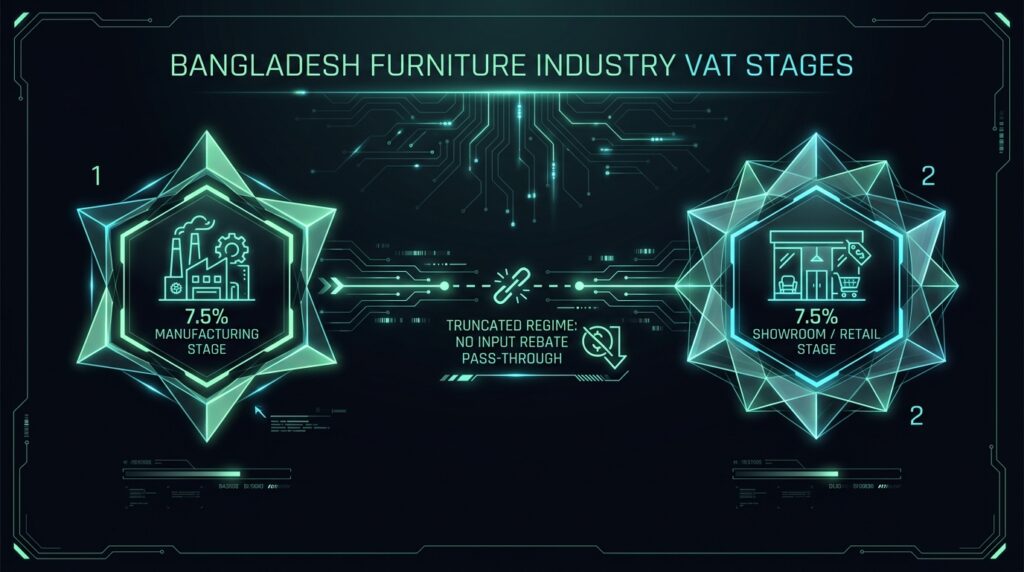
The current framework operates in two tiers:
- Manufacturing stage: 7.5% VAT (some sources cite 15%; the practical rate depends on category and value addition)
- Showroom / retail marketing stage: 7.5% VAT
This two-stage VAT on furniture industry Bangladesh structure means VAT is charged twice in the supply chain — once when the manufacturer sells to the showroom, and again when the showroom sells to the end consumer.
Why Two Rates Matter
The dual-rate structure has two implications. First, the effective cumulative VAT burden on furniture is higher than the headline 7.5%. Second, neither manufacturer nor showroom typically gets full rebate — both operate under truncated regimes — so VAT compounds through the chain.
VAT on Furniture Industry Bangladesh at Manufacturing
Furniture manufacturers must:
- Register for BIN regardless of turnover (manufacturing is a compulsory registration sector)
- Issue Mushak 6.3 on every supply to showrooms or dealers
- Maintain Mushak 6.1 (purchase) and 6.2 (sales) books current
- File Mushak 9.1 monthly
Under VAT on furniture industry Bangladesh rules, manufacturers cannot claim input rebate on the truncated portion, so timber, hardware, fabric, and finishing materials carry embedded VAT that becomes part of cost.
VAT on Furniture Industry Bangladesh at Showroom
Showrooms and retail furniture outlets face the same 7.5% truncated rate. They cannot claim input rebate on the manufacturer’s invoice. Their VAT obligation is simply 7.5% of their gross sale, deposited monthly through Mushak 9.1.
For corporate clients buying furniture for office fit-outs, this means the VAT on furniture industry Bangladesh charge is a final cost — not recoverable as input rebate even for VAT-registered buyers (because the seller’s truncated rate doesn’t pass through credit).
Custom Furniture and Joinery
When companies engage carpenters or joinery firms to make custom furniture, the treatment varies. If the joinery firm operates as a “construction-style” service provider, the VAT on furniture industry Bangladesh treatment may shift to service-based rates. Documenting the arrangement clearly in the contract prevents disputes.
Common Errors
In audits:
- Showrooms claiming input rebate on truncated-rate manufacturer invoices — disallowed
- VDS mismatch by corporate buyers withholding 15% when 7.5% applies
- Missing Mushak 6.3 from small manufacturers, triggering full VDS withholding
- Showroom not registering despite crossing thresholds
Strategic Compliance for VAT on Furniture Industry Bangladesh
Building proper VAT discipline pays off. Manufacturers issuing clean Mushak 6.3 invoices retain corporate clients more easily. Showrooms with current EFD systems enjoy better cashflow because corporate buyers don’t withhold VDS. The VAT on furniture industry Bangladesh framework rewards documentation discipline.
The Bottom Line
The furniture industry’s VAT regime is workable but unforgiving. For corporate clients procuring furniture in volume, understanding the VAT on furniture industry Bangladesh framework prevents cost surprises and ensures proper VDS treatment.
Written by Md Rakib Hassan — Income Tax Practitioner with 10+ years of tax compliance and audit experience across Bangladesh and the UK. Former accounts manager at a UK chartered accounting firm managing 1,000+ clients, with direct experience resolving multi-year tax audit disputes with HMRC and the NBR. Currently Finance Controller at a UK-based multinational tech group.
Need help with furniture industry VAT, Income Tax, RJSC, or Accounting? We support manufacturers, showrooms, and corporate buyers across Bangladesh and the UK.
Leave a Reply
You must be logged in to post a comment.