The EFD machine Bangladesh rollout has fundamentally reshaped how retail VAT compliance works. From restaurants in Gulshan to electronics shops in Bashundhara, EFD installation is no longer optional — and businesses that embrace it gain real competitive advantages.
What Is an EFD Machine Bangladesh?
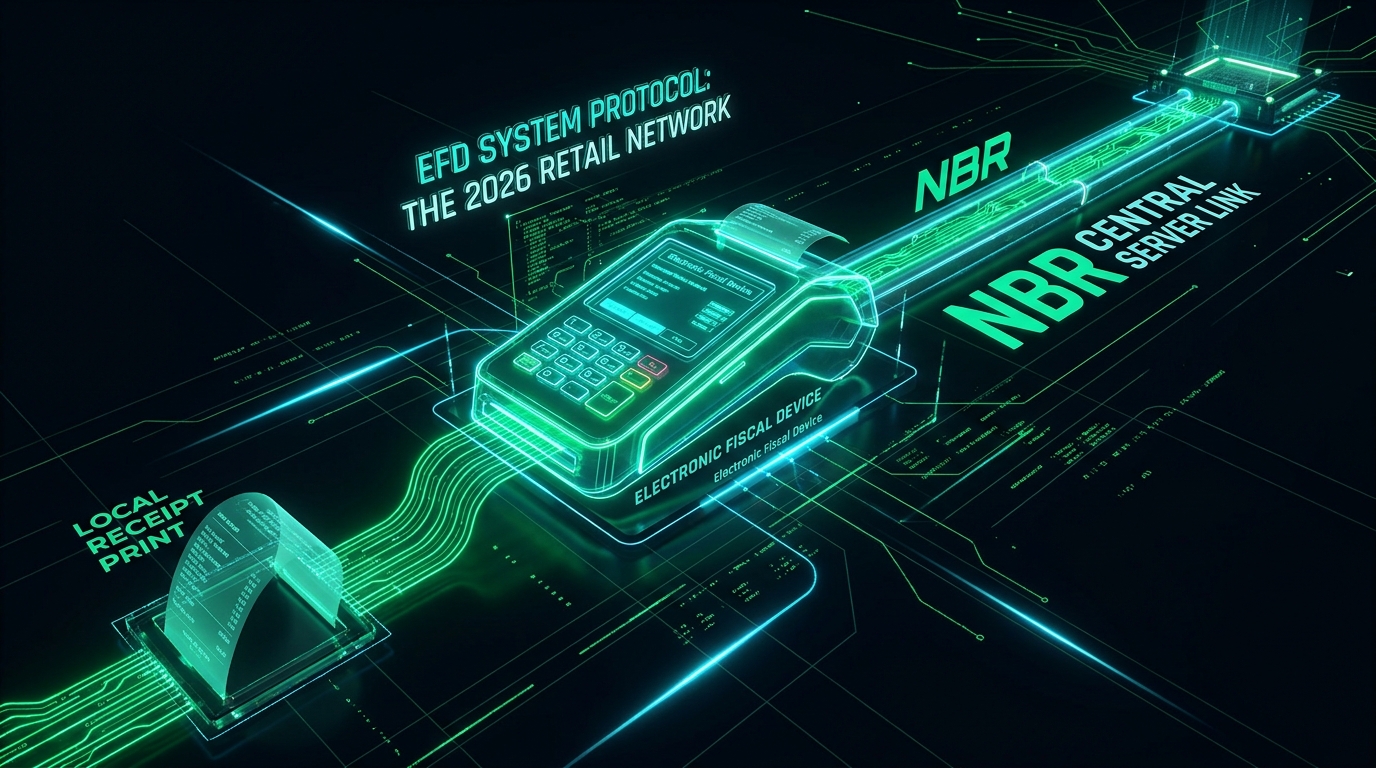
An EFD machine Bangladesh (Electronic Fiscal Device) is an NBR-approved point-of-sale terminal that automatically transmits every transaction to NBR’s central server in real time. The device generates Mushak 6.3-compliant invoices, ensuring every taxable supply is recorded with NBR before the customer leaves.
Alongside EFDs, NBR also recognises SDC (Sales Data Controller), PKI, and POS systems with proper integration.
Why EFD Machine Bangladesh Matters
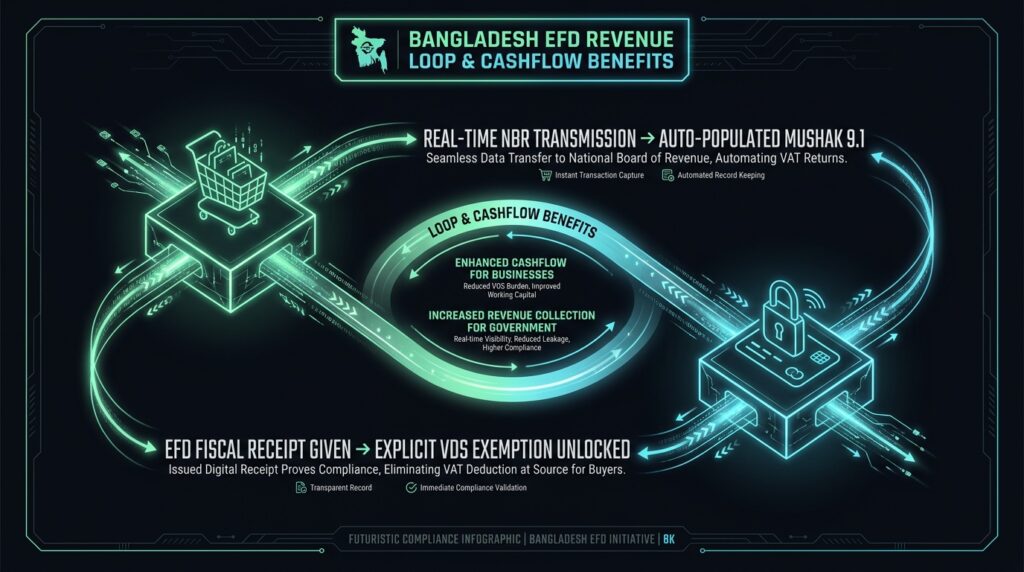
The commercial benefit goes beyond compliance. VAT deduction at source is not required if the VAT invoice (fiscal receipt) is issued using Electronic Fiscal Device (EFD) or Sales Data Controller (SDC) or Public Key Infrastructure (PKI) or Point of Sales (POS) system provided that the name and BIN number of supply receiver are mentioned on the receipt. Caripon
This means a retailer with proper EFD machine Bangladesh infrastructure receives the gross invoice value from corporate customers — no 15% VDS withheld upfront. For high-volume retailers, this transforms working capital.
Who Must Install EFD Machine Bangladesh?
NBR has progressively expanded EFD mandate to cover:
- All restaurants in major commercial areas
- Sweetmeat and bakery shops
- Furniture retailers
- Hotels (three-star and above)
- Electronics retailers
- Branded clothing stores
- Beauty parlours
- Health clubs
- Department stores
The list expands annually. Operating in mandated sectors without EFD machine Bangladesh triggers immediate compliance penalties.
How EFD Machine Bangladesh Works
The transaction flow:
- Customer makes purchase
- EFD generates Mushak 6.3 receipt with unique serial
- Receipt data transmits to NBR server in real time
- NBR’s central system logs the transaction
- Customer receives EFD-printed Mushak 6.3
- Retailer’s monthly Mushak 9.1 auto-populates from EFD data
Installation Process
To install an EFD machine Bangladesh:
- Hold valid BIN
- Apply through NBR’s approved EFD vendors
- Complete vendor setup and integration
- NBR officer verification and activation
- Begin live transactions
Common EFD Machine Bangladesh Issues
Three issues retailers face:
- Bypass attempts — using manual receipts during peak hours
- Customer BIN not captured — losing VDS exemption benefit
- Reconciliation gaps between EFD data and accounting books
NBR’s central server detects bypass through pattern analysis, making it increasingly futile.
EFD Machine Bangladesh and Customer Experience
A subtle benefit: corporate customers actively prefer suppliers with EFD machine Bangladesh because their procurement teams don’t need to handle VDS withholding paperwork. For retailers serving B2B clients, EFD is a competitive differentiator.
Strategic View
The EFD machine Bangladesh mandate isn’t a temporary phase — it’s the structural future of retail VAT compliance. Retailers who treat it as a tax burden miss the cashflow and customer experience benefits. Retailers who integrate it well capture both.
The Long Game
Within a few years, EFD machine Bangladesh coverage is expected to extend to nearly all retail. Early adopters build operational muscle that late entrants will struggle to develop under deadline pressure.
Written by Md Rakib Hassan — Income Tax Practitioner with 10+ years of tax compliance and audit experience across Bangladesh and the UK. Former accounts manager at a UK chartered accounting firm managing 1,000+ clients, with direct experience resolving multi-year tax audit disputes with HMRC and the NBR. Currently Finance Controller at a UK-based multinational tech group.
Need help with EFD installation, retail VAT, Income Tax, RJSC, or Accounting? We support retailers, restaurants, and hospitality businesses with EFD onboarding and end-to-end compliance across Bangladesh and the UK.
Leave a Reply
You must be logged in to post a comment.