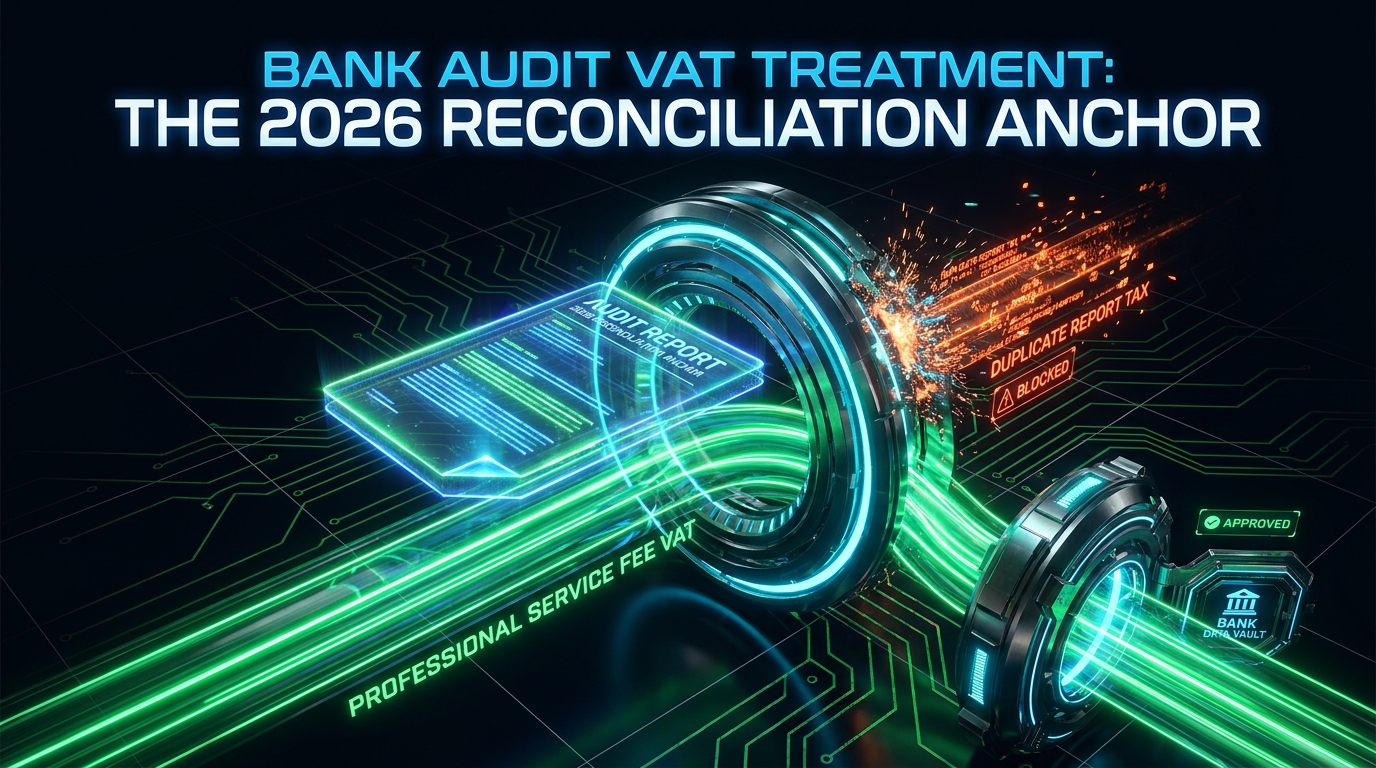
The treatment of bank audit report VAT Bangladesh is one of the most overlooked yet costly compliance corners in the country’s VAT framework. Banks routinely pay for external audit reports, certifications, and verification documents — and the VAT treatment of these payments has caught dozens of institutions in audit findings over the years.
What Is the Bank Audit Report VAT Bangladesh Issue?
Under SRO No. 17/Mushak/2019 dated 17 July 2019, NBR clarified that certain documents issued by professional service providers are not separately taxable when issued alongside the underlying professional service. The bank audit report VAT Bangladesh question arises when banks pay accountants, valuers, surveyors, lawyers, and engineers for reports — and someone tries to tax both the service and the document separately.
The Two Tables That Decide Treatment
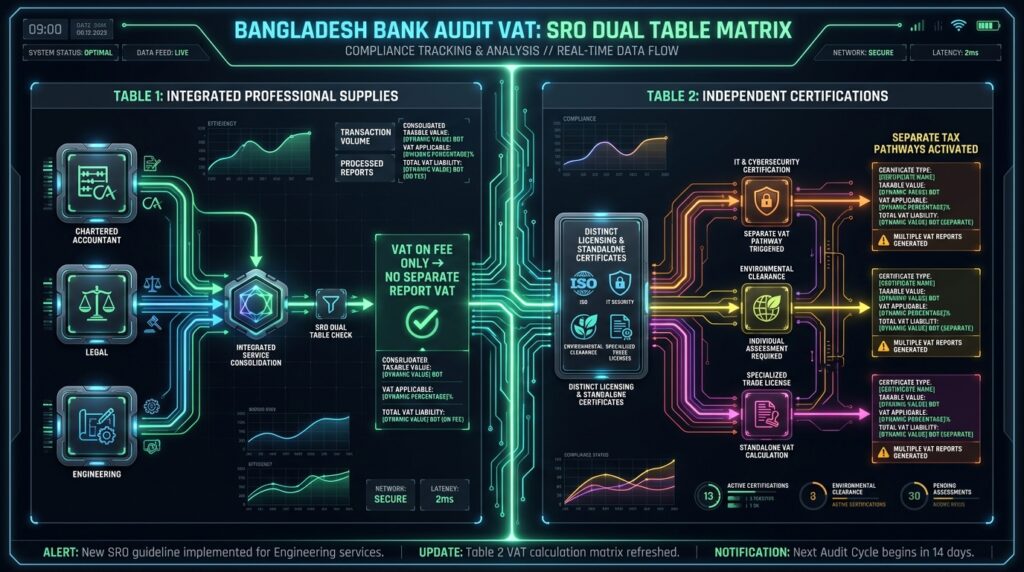
The 2019 SRO contains two key tables. Table 1 covers “documents that are not separately taxable” — meaning if the underlying professional service is taxed, the report itself doesn’t trigger separate VAT. Table 2 covers cases where the document constitutes a distinct supply.
For bank audit report VAT Bangladesh purposes, reports issued by chartered accountants, lawyers, engineers, architects, valuers, and surveyors as part of their professional service fall under the no-separate-VAT category. The professional fee carries VAT; the report itself doesn’t add another layer.
Common Bank Audit Report VAT Bangladesh Confusions
In multiple audit cases I’ve handled, three confusions recur:
- Double VAT charged on professional fee and on the report fee as if they were separate supplies
- Wrong VDS rate applied — withholding 15% as standard service when the underlying activity attracts a different rate
- No Mushak 6.3 issued by the professional, leaving the bank exposed during VAT audit
The bank audit report VAT Bangladesh rules are designed to prevent cascading; misapplication usually inflates the tax burden, not reduces it.
VDS on Professional Services to Banks
When a bank pays a chartered accountant or auditor, bank audit report VAT Bangladesh treatment requires VDS at the prevailing rate for professional services (typically 15% if no valid Mushak 6.3 is issued). If the auditor issues a valid Mushak 6.3 — especially from an EFD or SDC system — VDS is not required.
Special Documents Outside the Exemption
Some documents do attract separate VAT under the 2019 SRO’s Table 3 — including certain certificates, registrations, and licences issued independently. The bank audit report VAT Bangladesh framework doesn’t extend blanket coverage; each document type must be checked against the specific SRO entry.
Why This Matters for Banks
Banks operate under intense regulatory scrutiny and process thousands of professional service invoices annually. A single misclassification of bank audit report VAT Bangladesh treatment, multiplied across thousands of invoices, can compound into significant tax exposure. NBR’s bank-sector audits routinely focus on professional service VAT and VDS.
The Practical Approach
For banks and their professional service providers, the bank audit report VAT Bangladesh treatment should be documented at the engagement letter stage. Engagement letters that clearly specify VAT treatment, applicable VDS, and Mushak 6.3 issuance obligations prevent disputes at payment.
Written by Md Rakib Hassan — Income Tax Practitioner with 10+ years of tax compliance and audit experience across Bangladesh and the UK. Former accounts manager at a UK chartered accounting firm managing 1,000+ clients, with direct experience resolving multi-year tax audit disputes with HMRC and the NBR. Currently Finance Controller at a UK-based multinational tech group.
Need expert support on bank VAT, Income Tax, RJSC compliance, or Accounting? We support banks, NBFIs, and professional service firms with end-to-end VAT and tax compliance across Bangladesh and the UK.
Leave a Reply
You must be logged in to post a comment.