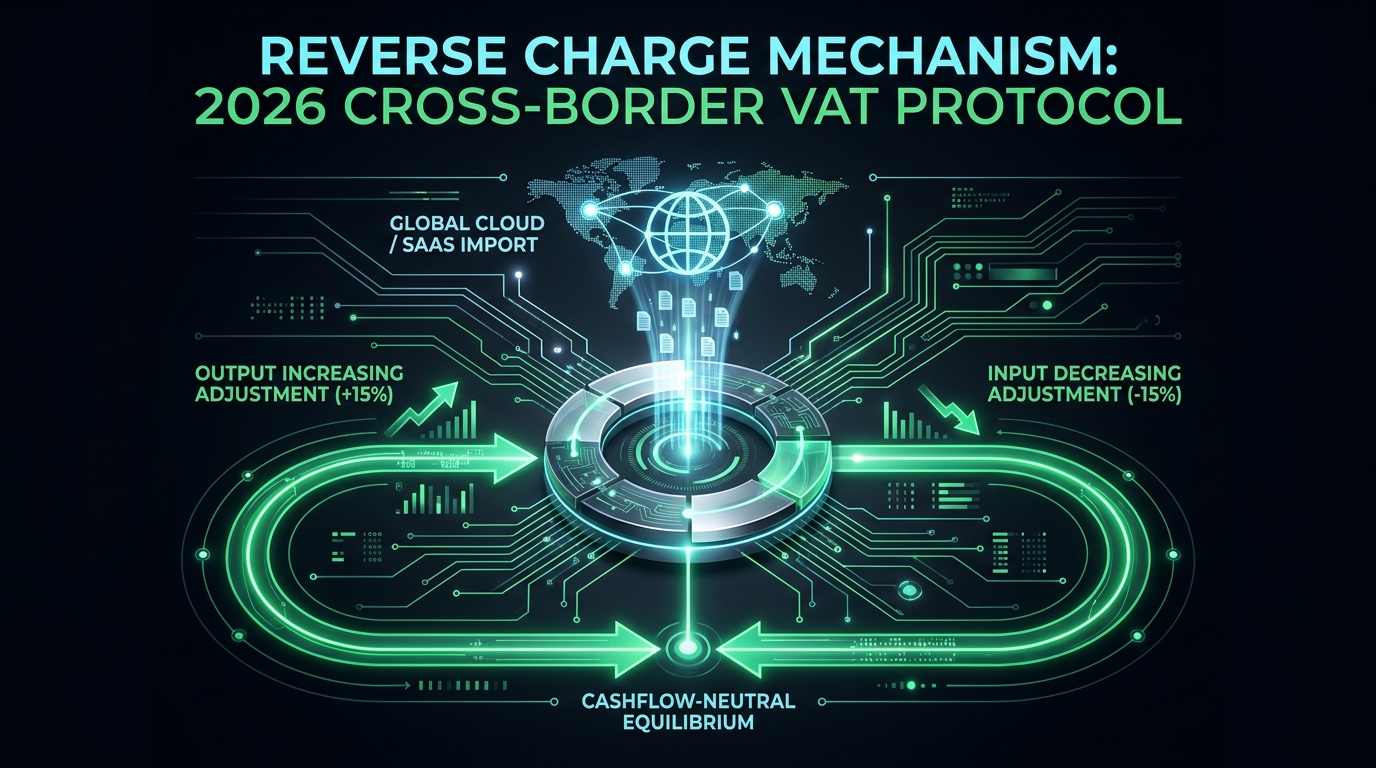
Every Bangladeshi business that uses foreign software, cloud services, foreign consultants, or digital advertising platforms encounters reverse charge VAT Bangladesh — whether they know it or not. The mechanism is widely misunderstood, regularly missed, and a favourite target of NBR audits.
What Is Reverse Charge VAT Bangladesh?
Reverse charge VAT Bangladesh shifts the VAT collection obligation from the foreign supplier (who can’t easily be taxed in Bangladesh) to the local recipient. Instead of the supplier charging VAT, the buyer self-accounts for VAT and pays it directly to NBR.
Reverse charge is applicable to service recipient at import level. Reverse charge is realizing tax from the service recipient in case of imported service. For example Company A will import software through internet as service; At the time of payment through banking channel Company will pay VAT and the same time he can adjust it against output tax. National Board of Revenue
When Reverse Charge VAT Bangladesh Triggers
Common triggers include:
- AWS, Azure, Google Cloud subscriptions
- SaaS tools (Salesforce, HubSpot, Zoom, GitHub)
- Foreign consultant fees paid abroad
- Facebook, Google, LinkedIn advertising
- International software licensing
- Foreign legal or audit fees
If you remit foreign currency for a service consumed in Bangladesh, reverse charge VAT Bangladesh almost certainly applies.
How Reverse Charge VAT Bangladesh Works in Practice
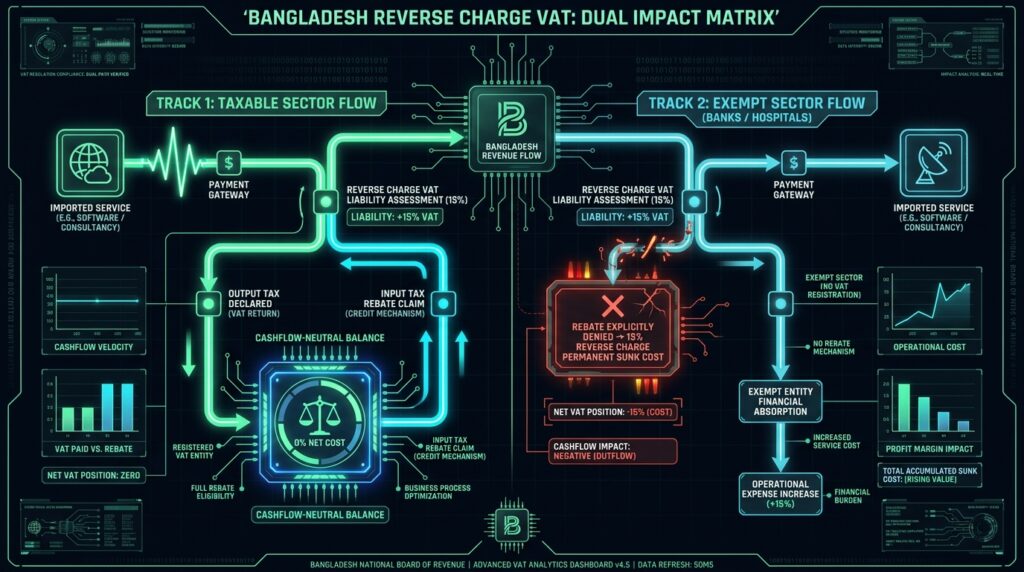
A worked example: Your company pays Microsoft USD 1,000 for Azure cloud services. At payment, your bank requires VAT clearance. You self-account for 15% VAT — BDT 16,500 at current rates — and:
- Pay the 15% reverse charge VAT Bangladesh to the treasury
- Report it as output VAT in your Mushak 9.1 (increasing adjustment)
- Claim the same amount as input VAT in the same return (decreasing adjustment)
- Net cashflow impact: typically zero for taxable businesses
For exempt businesses (banks, hospitals on exempt services), the reverse charge VAT Bangladesh is a real cost because they cannot claim the offsetting rebate.
Banking Channel Documentation
Banks now actively police reverse charge VAT Bangladesh. Before clearing foreign currency outward remittance for service payments, banks typically require:
- Form-A or Form-A-2 declaration
- Service contract or invoice
- Mushak 6.6 or VAT treasury challan
- TIN certificate
- Sometimes a CA certification
Without these, the remittance stalls.
Common Reverse Charge VAT Bangladesh Errors
Three errors recur. First, businesses pay foreign suppliers without realising the reverse charge VAT Bangladesh obligation existed — creating multi-year compliance gaps that surface in audit. Second, the input rebate claim is missed in the same return, leading to unnecessary cashflow drag. Third, exempt-sector businesses (insurance, banking) forget that for them, this VAT is a permanent cost and price their foreign service procurement accordingly.
Reverse Charge VAT Bangladesh vs Domestic VDS
Domestic VDS applies when paying local vendors who don’t issue Mushak 6.3. Reverse charge VAT Bangladesh applies when paying foreign service providers. Both involve the buyer paying VAT to NBR, but the legal mechanics, rates, and documentation differ.
The Strategic Takeaway
Reverse charge VAT Bangladesh is unforgiving but, for most taxable businesses, cashflow-neutral when executed correctly. Build it into your AP workflow before paying any foreign service provider, not after.
Written by Md Rakib Hassan — Income Tax Practitioner with 10+ years of tax compliance and audit experience across Bangladesh and the UK. Former accounts manager at a UK chartered accounting firm managing 1,000+ clients, with direct experience resolving multi-year tax audit disputes with HMRC and the NBR. Currently Finance Controller at a UK-based multinational tech group.
Need help with reverse charge VAT, foreign remittance compliance, Income Tax, RJSC, or Accounting? We support Bangladeshi and UK businesses with cross-border tax matters end-to-end.
Leave a Reply
You must be logged in to post a comment.