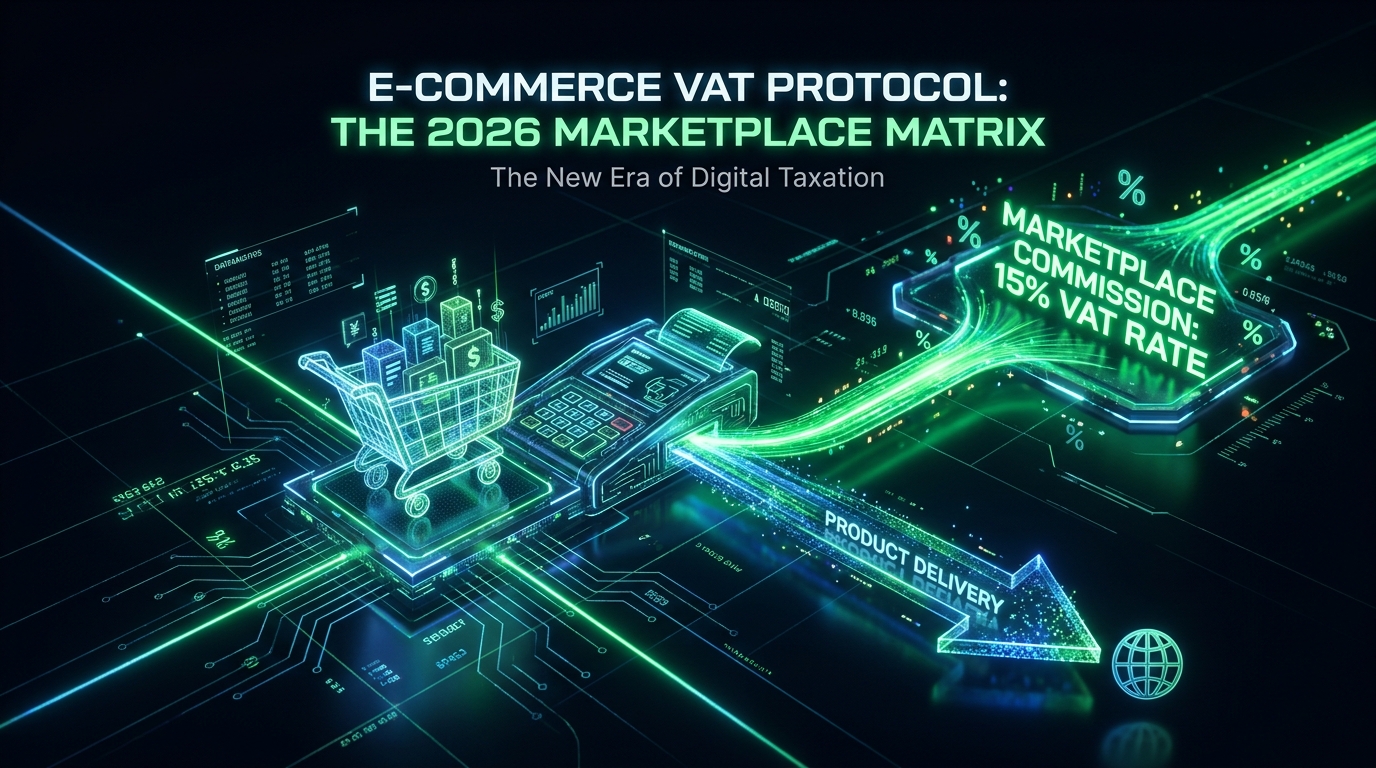
E-commerce in Bangladesh crossed an inflection point in 2025 when NBR sharply increased the online commission VAT rate. VAT on e-commerce Bangladesh is now one of the highest-friction compliance areas for marketplaces, sellers, and digital platforms alike.
What Triggers VAT on E-commerce Bangladesh?
VAT on e-commerce Bangladesh applies when:
- An online platform charges commission to sellers
- A merchant supplies goods or services through an online channel
- A digital service is delivered to a Bangladeshi consumer
- Cross-border SaaS is sold into Bangladesh
The Finance Ordinance 2025 was decisive on commissions. The applicable VAT rate for online product sales commission has been increased from 5% to 15%. Vatabout
The Two Sides of VAT on E-commerce Bangladesh
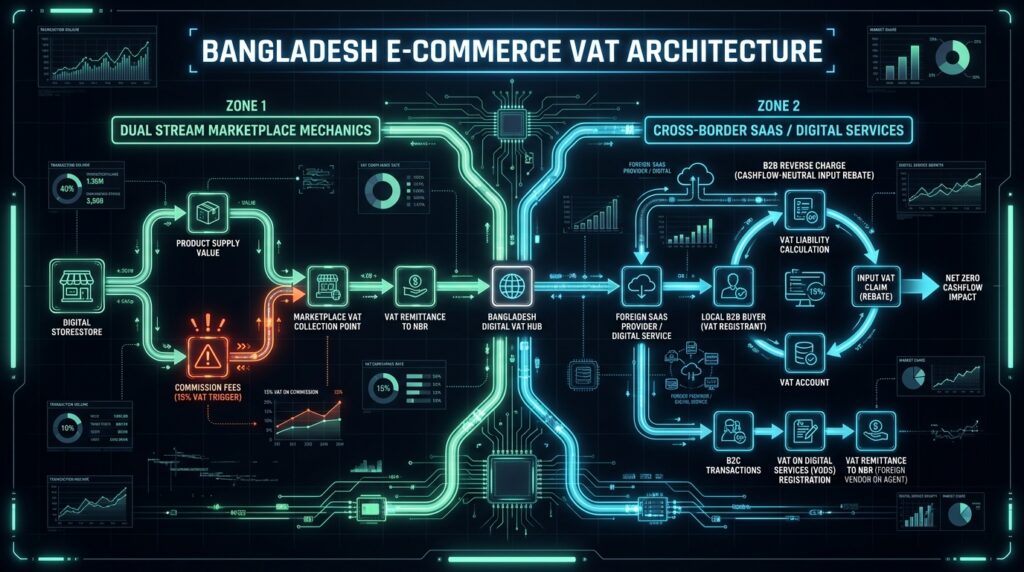
Marketplaces typically face VAT on two streams:
Commission income — Now taxed at 15%. If a marketplace charges sellers a 10% commission on a BDT 1,000 sale, the VAT on that BDT 100 commission is BDT 15.
Product supply — The underlying product still attracts whatever VAT applies to that product category. The marketplace acts as facilitator, not seller, in most B2C models.
This dual structure makes VAT on e-commerce Bangladesh more complex than traditional retail.
VAT on E-commerce Bangladesh for Digital Goods
For SaaS, digital downloads, and cloud services, the standard VAT rate applicable to SaaS and other digital services is 15%, with no reduced rates or exemptions for specific categories. PayPro Global
Cross-border digital service providers must also pay attention. Bangladesh imposes a standard VAT rate of 15.00% on digital products and services. The registration threshold for nonresident businesses is triggered upon the first B2C sale to a Bangladesh customer. For B2B transactions, a reverse charge mechanism applies, while B2C transactions require the seller to collect and remit VAT. Anrok
Compliance Steps for E-commerce Operators
A working VAT on e-commerce Bangladesh compliance setup needs:
- BIN registration before launch
- Mushak 6.3 invoice integration on the platform
- Monthly Mushak 9.1 filing by the 15th
- EFD or SDC connection where applicable
- Vendor BIN verification for the seller base
- Banking discipline — all transactions through formal channels
Common Errors in VAT on E-commerce Bangladesh
Three patterns I see repeatedly: marketplaces continue applying the old 5% commission VAT rate well after the 15% change took effect. Digital service exporters fail to document the customer’s location, weakening their zero-rate claim for foreign customers. Cross-border SaaS importers forget the reverse charge mechanism, leaving themselves exposed.
Cross-Border B2B Reverse Charge
When a Bangladeshi business buys software, cloud hosting, or digital services from abroad, VAT on e-commerce Bangladesh is collected via reverse charge. The buyer self-accounts for the 15% VAT in their return and typically claims it as input rebate in the same period — making it cashflow-neutral for taxable businesses.
Final Word
VAT on e-commerce Bangladesh is settling into a clearer framework, but the 2025 commission rate change caught many platforms unprepared. If you run any online business, your VAT setup deserves a fresh review now.
Written by Md Rakib Hassan — Income Tax Practitioner with 10+ years of tax compliance and audit experience across Bangladesh and the UK. Former accounts manager at a UK chartered accounting firm managing 1,000+ clients, with direct experience resolving multi-year tax audit disputes with HMRC and the NBR. Currently Finance Controller at a UK-based multinational tech group.
Need expert help with e-commerce VAT, Income Tax, RJSC, or full Accounting setup? We work with marketplaces, D2C brands, and SaaS companies across Bangladesh and the UK.
Leave a Reply
You must be logged in to post a comment.