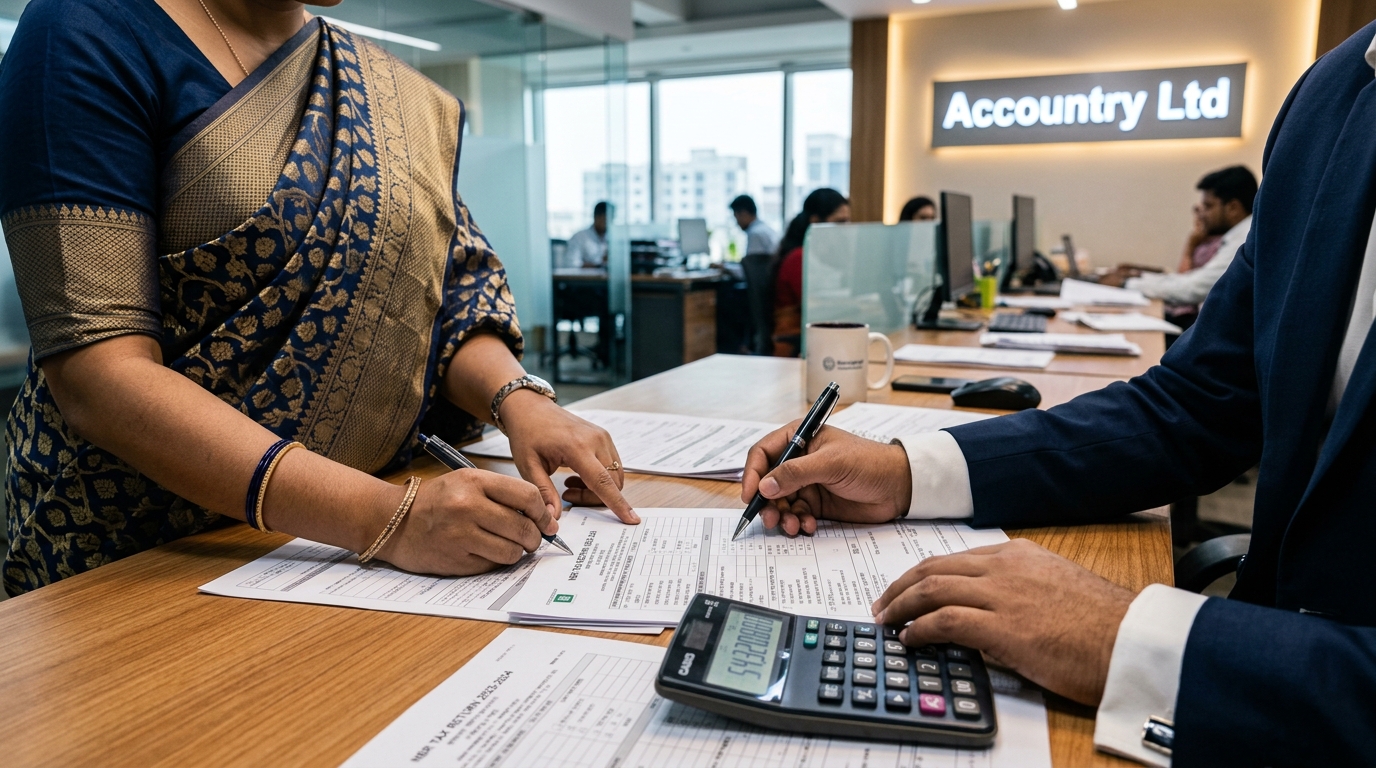
What financial documents do banks require for a business loan in Bangladesh?
Banks and private investors in Bangladesh typically require at least three years of audited financial statements, clean NBR tax clearance certificates (including corporate tax and BD VAT returns), and detailed cash flow forecasts. These documents prove the financial health, legal compliance, and repayment capacity of the scaling business.
Securing Capital: Financial Readiness for Bank Loans and Investments in Bangladesh
Every ambitious business in Dhaka, Sylhet, and the broader Bangladesh market eventually reaches a point where organic growth is not enough. To build a new facility, acquire advanced tech, or expand internationally, you need external capital. Whether you are applying for a substantial commercial bank loan or pitching to private investors, the deciding factor will always be the integrity of your financial records.
Banks and investors do not fund ideas; they fund financially sound operations. Presenting messy spreadsheets or delayed tax filings will instantly disqualify your application. As a finance manager with over 10 years of experience liaising with Chartered Accountants and tax authorities, I specialize in preparing companies for rigorous external scrutiny. This guide details how to make your business financially bulletproof for investors in 2026.
The Reality of External Scrutiny
When a financial institution evaluates your business, their primary goal is risk assessment. They will meticulously analyze your financial statement history, looking for cash flow leaks, compliance failures, or inconsistent reporting.
Many business owners mistakenly believe their books are clean simply because they file their annual taxes. However, an investor’s due diligence goes much deeper. They will cross-reference your bank deposits with your NBR submissions and your internal ledgers. Having collaborated with Certified Tax Advisors to resolve complex tax challenges, I know exactly what auditors look for. If there are missing documents from audits spanning five to six years, external funding will be completely blocked.
Cleaning Up Historical Discrepancies
Before you even approach a bank, you must conduct a ruthless internal audit. You cannot present financial statements that contain unresolved anomalies.
In my practice, I frequently uncover and rectify historical errors made by previous accountants. For example, addressing historical discrepancies can lead to substantial tax savings and protect the company from compliance penalties. If a bank discovers a 4.5 lac BDT VAT submission error that your team missed, they will lose all confidence in your management. A top-tier accountant finds these errors, rectifies them with the NBR, and ensures your historical data is completely flawless before the bank ever sees it.
Proving Repayment Capacity with Forecasts
Having clean historical data proves you are a responsible business, but investors also need proof that their money will grow. This requires high-level financial forecasting.
You must present a highly relevant, data-driven forecast of how the loan or investment will be utilized. Your data and examples must match real-world market scenarios. A professional Virtual CFO will build complex cash flow projections that map out exact budget consumption and task completion timelines. When you can show an investor a perfectly calculated return on investment (ROI) backed by solid historical margins, your chances of approval skyrocket.
Professional Document Presentation
The presentation of your data matters just as much as the numbers themselves. When submitting financial packages, the professionalism of your invoices, payroll records, and automated PDFs is heavily scrutinized.
It is vital that all corporate documents maintain a strict, formal layout. For instance, any casual email messaging or marketing text must remain entirely outside of official PDF invoices. Clean, standardized documentation signals to investors that your company operates with high-level corporate governance.
Pre-Investment Checklist
| Financial Area | Readiness Requirement | Why Investors Care |
|---|---|---|
| Historical Accounts | 3+ years of finalized, audited statements | Proves historical stability and profitability |
| Tax Compliance | Up-to-date Mushak 9.1 and corporate tax | Eliminates the risk of sudden NBR asset freezes |
| A/R and A/P | Clean aging reports with low bad debt | Shows you can actually collect the money you earn |
| Forecasting | 12 to 36-month detailed cash flow projection | Demonstrates exact loan repayment capacity |
Export to Sheets
Conclusion
Securing external capital is a transformative moment for any Bangladeshi enterprise, but it requires a foundation of absolute financial transparency. You cannot rush financial readiness. By cleaning up historical discrepancies, automating your current reporting, and building bulletproof cash flow forecasts, you position your business as a highly attractive, low-risk investment. If you are planning to apply for a major corporate loan or seek private equity in 2026, contact me today to begin your financial due diligence preparation.
Frequently Asked Questions (FAQs)
- How long does it take to prepare for a bank loan application?
If your books are messy, it can take 2 to 3 months to conduct a full internal audit, rectify NBR tax anomalies, and generate the required audited statements. If you already use cloud accounting and an expert finance manager, preparation takes just a few days. - Will the bank audit my company directly?
Banks rely heavily on the reports provided by independent Chartered Accountants, but the bank’s internal credit risk team will still perform their own rigorous analysis of the submitted data. - Why do I need a forecast if I already have collateral?
Collateral protects the bank in the worst-case scenario, but banks do not want to seize assets. They want to be paid back in cash. A strong forecast proves your daily operations generate enough cash to cover the monthly loan installments.