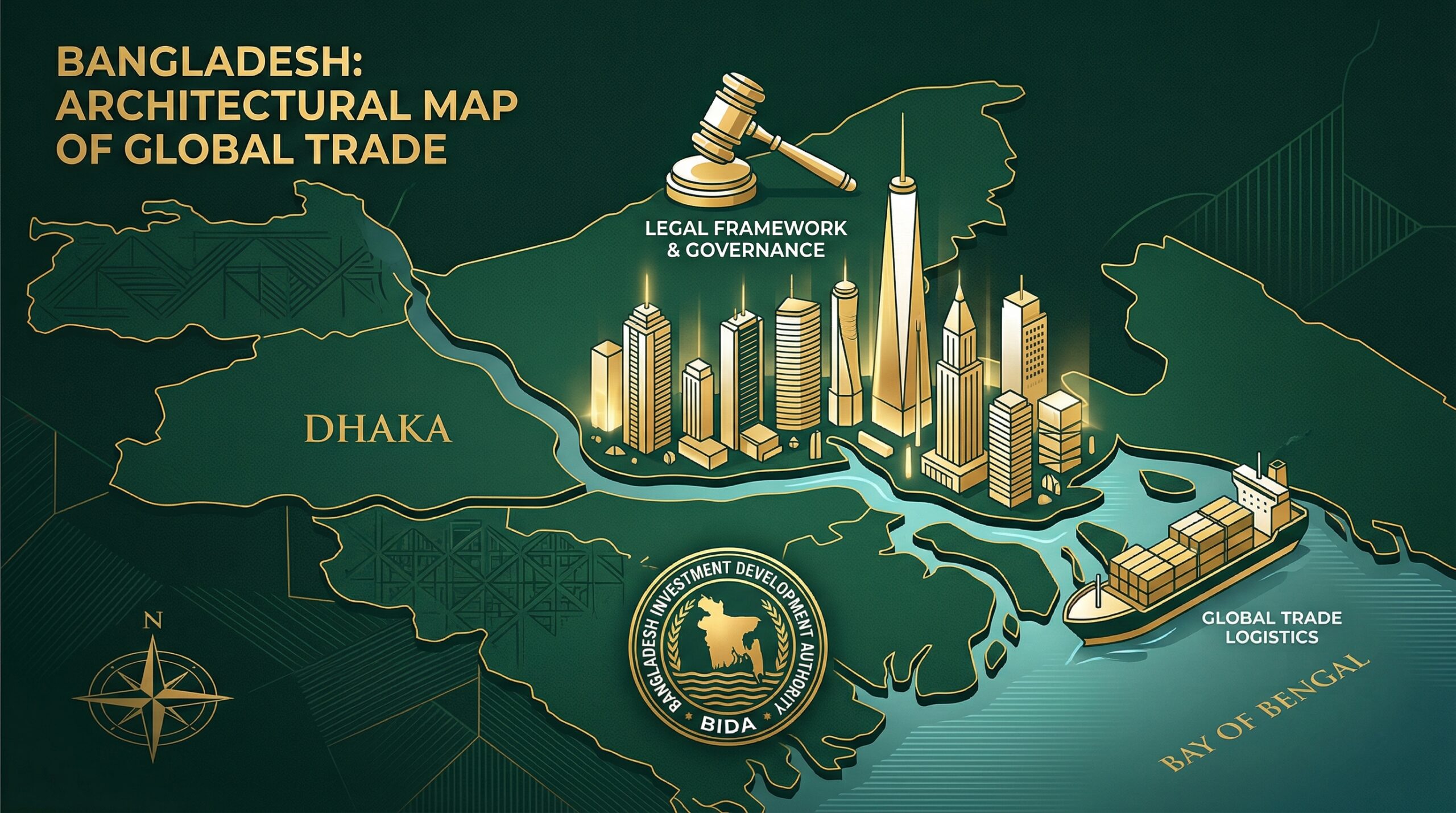
A Strategic Roadmap for Business Setup and Scaling in Bangladesh
Launching a business in Bangladesh requires navigating a multi-layered regulatory environment. For global investors and growing local enterprises, success depends on more than just capital; it requires a seamless integration of legal permits, investment approvals, and operational licensing.
1. BIDA Registration and Foreign Investment
The Bangladesh Investment Development Authority (BIDA) is the primary gateway for industrial investment. Proper alignment with BIDA is essential for securing critical operational advantages:
- All BIDA Recommendation Services: Facilitating the necessary approvals for industrial projects.
- Work Permits for Foreigners: Managing the legal requirements for international staff to work locally.
- Industrial and Commercial Support: Streamlining the process for both large-scale manufacturing and commercial ventures.
2. Core Operational Licenses
Before a company can begin physical operations, several essential licenses must be secured from local and national authorities:
- Trade Licenses: Obtaining new applications and managing renewals to maintain legal standing.
- Environmental and Safety Permits: Securing Fire Licenses, Factory Licenses, and Environmental Clearances to ensure industrial compliance.
- BSTI Certifications: Managing packaging (b-Mark) and Halal certificates for consumer goods and food products.
3. Logistics and International Trade Enablement
For companies involved in the movement of goods, the Chief Controller of Imports & Exports (CCI&E) provides the necessary framework for global trade:
- Import Registration Certificate (IRC): Necessary for businesses importing raw materials or finished products.
- Export Registration Certificate (ERC): Essential for firms looking to access international markets.
- Chamber Memberships: Securing memberships with DCCI, FBCCI, or BGMEA to foster industrial growth and networking.
4. The Strategic CFO Perspective: Continuity and Exit Planning
From the viewpoint of a CFO or General Manager, setting up a business is only the first step. Long-term success involves managing the entire lifecycle of the entity:
- Sustainability & Governance: Ensuring that the company adheres to international corporate governance standards from day one.
- Exit and Continuity Planning: Preparing for long-term stability or strategic exits through structured winding-up processes if necessary.
- Asset Valuation: Conducting precise valuations to support mergers, acquisitions, or financial reporting.
By centralizing these regulatory hurdles under a single strategic partner, businesses can reduce their “time-to-market” and focus on driving revenue.